

How Europe built its technology giants
The histories of ASML, SAP, Rolls-Royce, Novartis and BAE Systems offer a reason to look more closely at Europe’s smaller companies today.
 Fethi U.Published
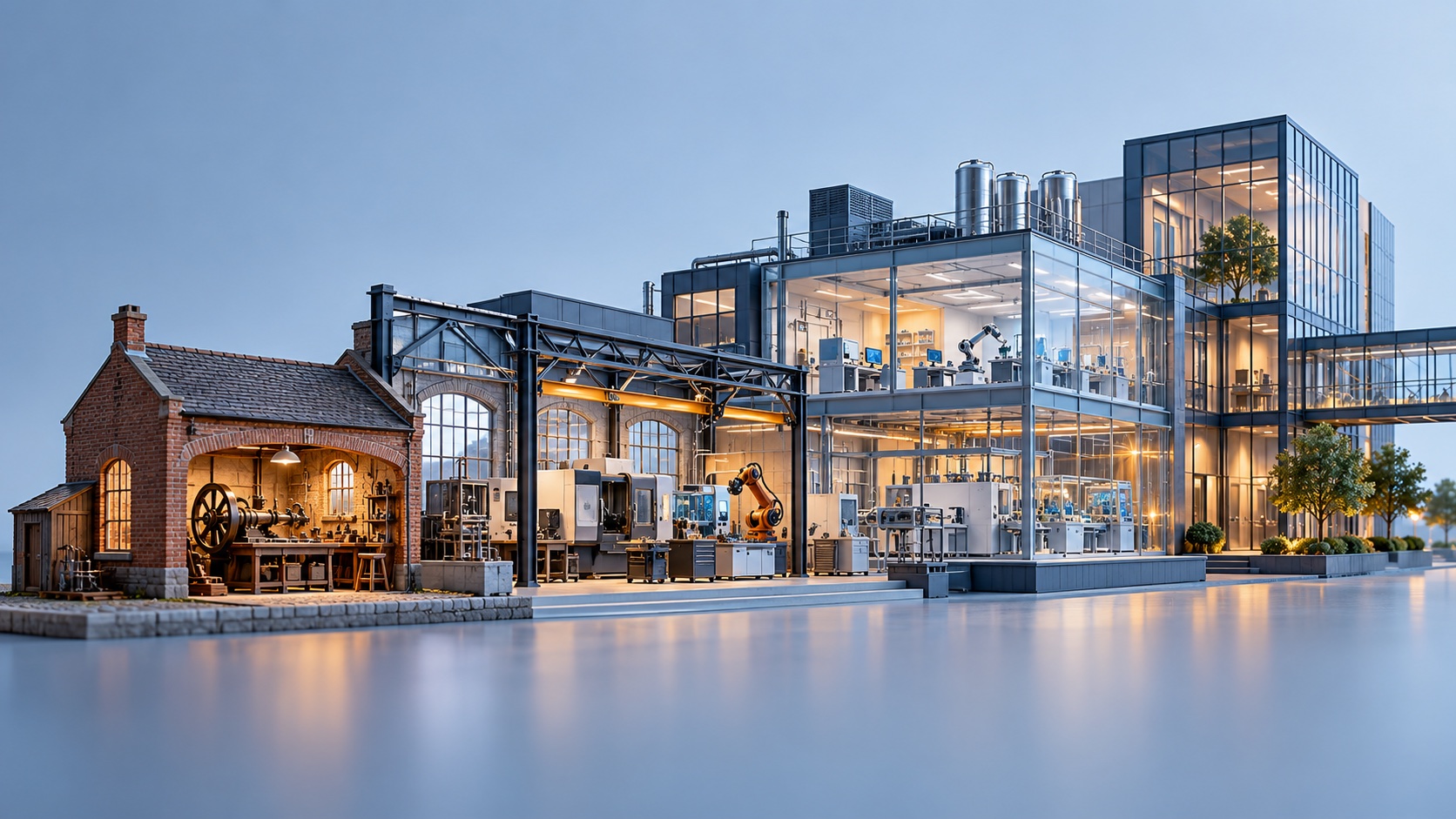
Europe’s next major technology business may already be working on a problem most of us rarely think about. Its name might mean little outside its industry, yet its product could be becoming increasingly useful to the customers who depend on it.
That possibility is easier to appreciate when we look at how some familiar European businesses developed. Their histories include small teams, uncertain beginnings and changes of direction. They also include mergers and government support, because building a large technology business has rarely been a solo effort.
Looking back cannot tell us which smaller company will succeed next. It can, however, help us recognise why an unfamiliar name deserves a closer look.
ASML found a way to make better chips
ASML began in 1984 as a joint venture between Philips and ASM International. Its early team worked in a leaky shed beside a Philips office in Eindhoven, developing machines that used light to transfer circuit patterns onto silicon wafers. These machines helped chipmakers produce the tiny structures inside their chips.
The modest premises make a memorable origin story, but ASML also had an important advantage: years of Philips research behind it. Even so, the early business struggled with strong competitors, few customers and a shortage of money. Further support from Philips helped it continue.
The breakthrough came with the PAS 5500 in the early 1990s. Better productivity and finer detail in the patterns it could produce helped ASML win customers and become profitable. Its 1995 stock-market listing then provided funding for further development and production.
ASML grew because improving its machines mattered to chipmakers. Partnerships, including its long relationship with optics specialist Zeiss, helped it keep making those improvements. The shed was temporary; the need to make better chips kept growing.
SAP started by working alongside its first customer
SAP’s beginnings were closer to the customer’s office than a research laboratory. In 1972, five former IBM employees founded the business and spent much of their time at their first customer, the German subsidiary of chemical company ICI.
They wanted to connect business activities through software and make information available immediately, rather than waiting for overnight computer processing. As the software developed, purchasing, stock records and accounting could work together. Thus, a transaction in one part of a business could update the information needed elsewhere.
Working alongside customers helped the founders understand these everyday problems. By the end of their first year, the five founders and two employees had completed an initial materials, information and accounting system.
SAP later widened its reach by adapting to new computing technology. Its R/3 software, released in 1992, could run on servers from different manufacturers, opening up more potential customers. Consulting partners helped those customers install and use it, while international expansion took the business beyond Germany. A practical problem encountered at one customer had become the basis for a much larger business.
Rolls-Royce grew by taking its engineering into the air
The engineering business behind Rolls-Royce began with Henry Royce’s electrical and mechanical company in 1884. After building his first car in 1904, Royce met Charles Rolls, who sold cars in London. Their collaboration gave the Rolls-Royce name its start.
Aircraft created a much larger opportunity for their engineering. During the First World War, Royce designed the Eagle aero engine. Later, demand for the Merlin engine, which powered aircraft including the Spitfire and Hurricane, helped turn a relatively small company into a major aircraft-engine manufacturer.
The move into jet engines extended that opportunity, yet it also exposed the cost of developing ambitious technology. Problems with the RB211 engine led to Rolls-Royce being taken into state ownership in 1971 so development could continue. It returned to private ownership in 1987; the car business had been separated earlier.
This history matters because the successful technology and the difficult finances were part of the same story. Engineering opened new markets, but the business also needed funding to survive the journey.
Novartis has roots in the dye trade
Novartis shows how a business can grow far beyond the market its predecessors originally served. Its family history includes Basel companies working in chemicals and fabric dyes, with Ciba’s dye production beginning in 1859 and Kern & Sandoz founded in 1886.
Over time, these businesses moved into medicines. Ciba produced its first pharmaceutical substances in 1900, while Sandoz established a pharmaceutical department in 1917. Their work in chemistry developed into businesses serving a very different customer need: treating illness.
Novartis itself was already large when Ciba-Geigy and Sandoz merged in 1996. Its story therefore spans generations of scientific work and businesses joining together, rather than a single small company growing under the same name.
For today’s smaller firms, that history raises an interesting possibility: expertise developed for one purpose may eventually become valuable in another market. The business a company becomes can look quite different from the one it started with.
BAE Systems brings together many earlier beginnings
BAE Systems also emerged from established businesses. It was formed in 1999 through the combination of British Aerospace and Marconi Electronic Systems. To find its smaller beginnings, we need to look further back through those businesses.
One example is Avro, founded by brothers Alliott and Humphrey Roe in 1910 in the basement of a Manchester mill. Early aircraft development led to military orders, and demand for the Avro 504 training aircraft helped the company expand during the First World War.
Avro later became part of Hawker Siddeley, one of the businesses that eventually formed British Aerospace. Its history illustrates another route to scale: a smaller company’s designs and engineering skills can become part of a much larger group. The original name may disappear while the work continues.
What this means for smaller European companies today
These histories make a case for curiosity. A business does not need to be widely recognised for its technology to matter, and its current size does not necessarily describe its long-term opportunity.
Across these examples, growth came from making something useful, finding more customers and continuing to develop the business as markets changed. Sometimes that required outside capital, a new partner or a merger. It usually took much longer than the neat version of the origin story suggests.
Yet we are looking at companies whose names survived. Many others struggled or disappeared, so these examples show what is possible without telling us how likely it is. A promising business can also be a disappointing investment if the price already assumes too much future success.
For someone considering smaller European tech companies, the starting point is therefore understanding what a business does, why customers choose it and whether that demand is growing. A specialist can build a valuable business by serving its market well, even if it never becomes another ASML.
Some of Europe’s future leaders may already be listed on its stock exchanges. Getting to know them while their stories are still developing is part of what makes following this part of the market so interesting.