

GEA and industrial energy efficiency in Europe
We explore how European factories can use less energy and reduce their reliance on fossil fuels, and how GEA helps customers make those changes.
 Fethi U.Published
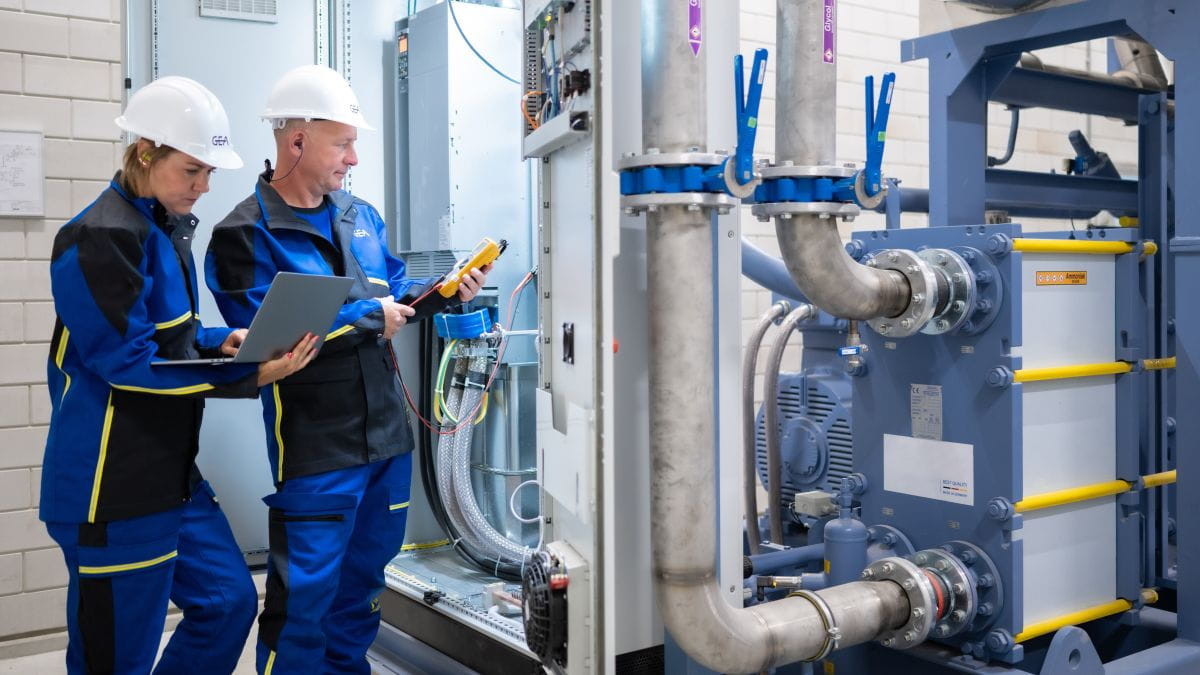
Europe’s factories account for around a quarter of the EU’s final energy consumption. Improving how they use that energy can therefore make a difference to production costs, exposure to fuel prices and dependence on imports. It also creates demand for equipment that helps manufacturers make those changes.
A new European Commission report, Industrial electrification and energy efficiency, brings that opportunity into focus. It draws on 189 demonstration installations across 85 EU-supported projects in 21 Member States, representing around €1 billion of investment. The examples show how European industry can replace some fossil-fuel use with electricity, recover energy that would otherwise be lost and run existing equipment more efficiently.
GEA Group AG is one of the companies supplying technology for this work. The German engineering group makes production equipment for food, drinks and pharmaceuticals, alongside heating, cooling and maintenance services. Because it works on both production and energy use, GEA can help customers connect energy-saving equipment to the machinery they already operate.
Five technologies behind industrial electrification and efficiency
The report groups the work into five areas, each addressing a different part of a factory’s energy needs. Industrial heat pumps recover heat and raise its temperature so it can be used again. Electric furnaces and boilers provide another route, replacing fuel combustion with electricity for heating and manufacturing.
Factories can also change when they use electricity, install local renewable generation and store energy for later. This flexibility helps them make better use of the electricity available, although production schedules limit how much demand can move. A fourth area, waste-heat recovery, captures energy for reuse within a factory or by a neighbouring business or heating network.
The fifth covers improvements to existing operations: more efficient motors, better insulation, sensors and controls. These can reduce the energy needed to do the same work. Thus, the opportunity extends from replacing major heating equipment to upgrading machinery already in service.
The Commission’s examples span food processing, paper, glass, steel and other industries. Their needs differ, so there is no single piece of equipment that solves every factory’s energy problem. The report instead shows how several approaches can work together, with their adoption depending on costs, infrastructure and the demands of production.
GEA’s heat pumps and heat-recovery equipment
GEA’s industrial heat pumps use electricity to recover heat and make it useful at a higher temperature. A factory may be paying to remove heat from one process while buying fuel to heat another. Connecting those tasks can reduce the amount of new energy it needs to buy.
The report includes GEA’s installation at Tiense Suiker in Belgium as an example. Operating since 2025, it recovers heat for reuse as steam and supplies around 5% of the factory’s process heat alongside its existing boilers. It demonstrates a partial upgrade to an operating site, without requiring the entire factory to switch at once.
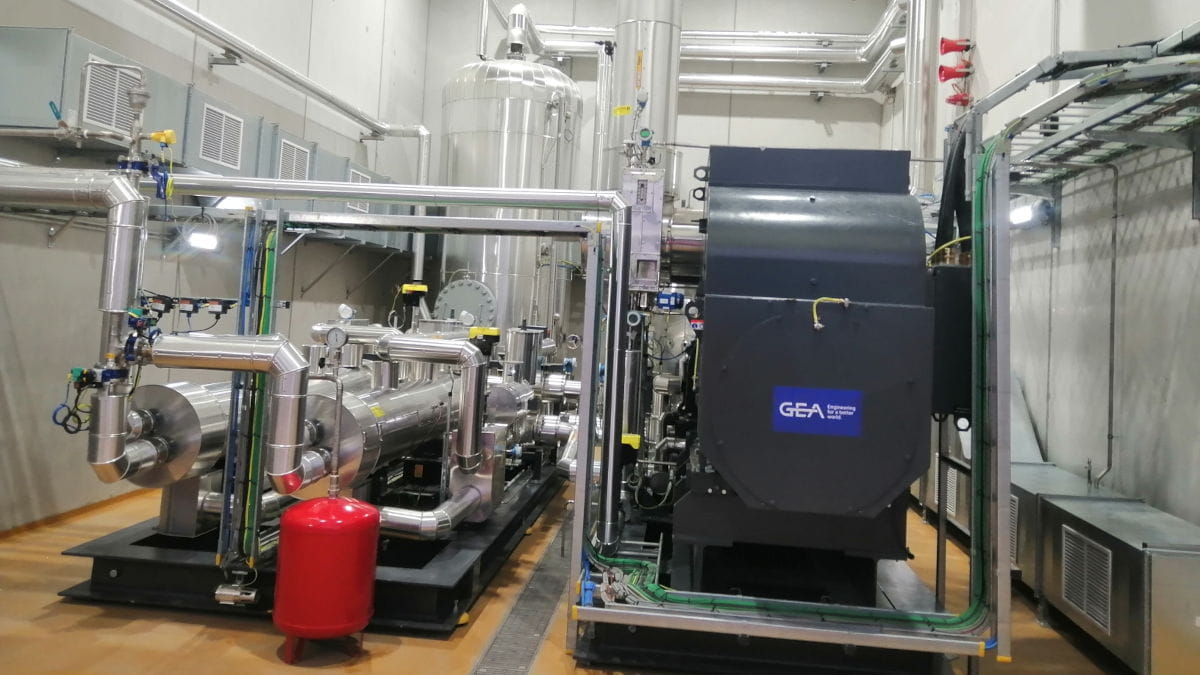
GEA also supplies equipment such as AddCool, which recovers heat for industrial drying and can be fitted to existing dryers, including those from other manufacturers. Customers can buy the equipment together with engineering, installation and ongoing support. This gives GEA a role in upgrading existing factories as well as equipping new ones.
There is evidence of the benefits at customer sites. At HEINEKEN’s Manchester brewery, GEA supplied a heat-recovery network with heat pumps and changes to existing equipment. HEINEKEN reported a 33% reduction in on-site natural-gas use for July to December 2025 compared with the same months in 2024. That result belongs to this particular installation; savings elsewhere depend on the starting point and the work carried out.
GEA operates alongside other European suppliers in this market. Italy’s Turboden, also featured in the Commission’s report, supplies industrial heat pumps and equipment that converts waste heat into electricity. The range of suppliers reflects the different temperatures, processes and energy sources involved.
Lower energy use has to make financial sense
The report makes clear that technical progress alone does not determine how quickly factories invest. Equipment has to fit the site, production must remain reliable, and the expected savings need to justify the purchase and installation costs.
Electricity prices are particularly important. If electricity is expensive relative to gas, even an efficient heat pump can take longer to pay for itself. Grid connections, available electrical capacity and permitting can also hold up a project. The Commission therefore links wider deployment to financing, suitable energy-price conditions and easier connections to the electricity network.
This matters for equipment suppliers because a successful demonstration and a customer's decision to invest are separate steps. The report’s approximately €1 billion covers the projects reviewed, including around €600 million of EU support. It is evidence of work already funded, rather than a forecast of future orders for GEA or other suppliers.
Financial facts
GEA’s first-half results show the scale of the wider business. These group figures include its other processing and farming equipment, rather than measuring heat-pump sales separately.
Group results for January to June, in € million:
| Reported figure | H1 2025 | H1 2026 |
|---|---|---|
| Revenue | 2,570.2 | 2,715.6 |
| Operating profit (EBIT) | 294.3 | 333.7 |
Sales increased, and operating profit grew faster. Explore GEA’s financial statements and latest reported results.
GEA’s next step: planning energy upgrades with customers
GEA will present its Add Better Consulting service at BrauBeviale on 10–12 November 2026. The service assesses production, heating and cooling together, then compares possible upgrades, their costs and their impact on operations. GEA can also take on the subsequent planning, installation and support.
It addresses a practical issue running through the Commission’s report: manufacturers need a workable investment plan as well as better technology. For GEA, helping customers decide what to change can connect its engineering knowledge with future equipment and service business.
Explore our GEA company profile for its products, customer value and latest financial results.
Share this article
Sources
- European Commission: Industrial electrification and energy efficiency, especially pages 6–7, 12–15 and 35–36
- GEA industrial heat pumps and heat-recovery applications
- GEA’s heat-pump installation at Tiense Suiker, 21 February 2025
- GEA AddCool for spray dryers, installation and service
- GEA’s heat-recovery network for HEINEKEN Manchester, 27 July 2023
- HEINEKEN’s Manchester results and comparison period, 9 September 2026
- Turboden’s industrial heat-pump and waste-heat power technologies
- GEA’s half-yearly financial report 2026, consolidated income statement on page 32
- GEA’s Add Better Consulting announcement and BrauBeviale plans, 4 November 2026