

From CERN roots to quantum control: Creotech Quantum S.A.
The Warsaw company sells the electronics that tell scientific equipment what to do and precisely when to do it. Its next challenge is helping quantum computers grow beyond the laboratory.
Creotech Quantum S.A.’s story starts with three CERN workers and an unusual approach to selling electronics: give people the designs. They founded Creotech Ltd. in 2008, the predecessor of Creotech Instruments S.A. In a presentation hosted by CERN, co-founder Grzegorz Kasprowicz explained the business logic. By publishing the hardware designs, the company let customers see how the equipment worked and adapt it themselves, while earning money from building complete systems, software and support. Freely available blueprints, however, do not assemble themselves.
That scientific-electronics business took a new shape when Creotech Quantum S.A. separated from Creotech Instruments S.A. on 1 April 2026. Based in Warsaw, it began trading on the Warsaw Stock Exchange later that month. Its products include quantum-control electronics, precise timing systems, scientific cameras and technology for quantum-secured communication. The control electronics turn a researcher’s instructions into carefully timed electrical signals that help operate the lasers, detectors and other instruments around a quantum experiment. A quantum processor depends on that supporting machinery to do useful work. Timing also connects this business to equipment spread across a network, including systems that exchange encryption keys.
What customers actually buy
Research laboratories and quantum-computer builders buy Creotech Quantum S.A.’s electronics to control experiments without designing every circuit board themselves. Its Sinara range consists of modules with different jobs, such as generating signals, setting voltages and collecting measurements. Customers can order individual boards or an assembled system, along with training, calibration and integration support.
The boards work with ARTIQ, an open-source control system developed by M-Labs with the US National Institute of Standards and Technology. Researchers describe an experiment in Python-based code, and dedicated hardware carries out the parts that need precise timing. This lets a researcher change the sequence in software while keeping the same equipment.
This addresses a problem that predates Creotech Quantum S.A.’s listing. M-Labs describes how Sinara developed as a more reproducible, modular alternative to the hardware physicists had built in-house for early ARTIQ systems. The point is to let a laboratory spend more time running experiments and less time maintaining its own small electronics department.
An open design still needs a supplier
Creotech Quantum S.A.’s role combines manufacturing and specialist engineering within a shared platform. Much of Sinara’s hardware design comes from Warsaw University of Technology, with development and testing contributions from the company. M-Labs and QUARTIQ support the connection to ARTIQ. Creotech Quantum S.A. says its modules work with other suppliers’ Sinara hardware.
That openness gives customers options. M-Labs itself sells assembled Sinara systems. Beyond that ecosystem, Quantum Machines offers its OPX1000 control platform, while Qblox sells its modular Cluster for qubit control and measurement. Their hardware and software differ, so the choice depends on the processor and experiment being built. Since customers can buy Sinara systems from other suppliers, Creotech Quantum S.A. has to win business through the equipment, integration and support it offers.
There is evidence that researchers value this approach. In a paper describing CERN’s AEgIS experiment, its authors cited long-term support and a community using similar equipment as reasons for moving from custom electronics and software to Sinara and ARTIQ. That supports the case for the shared platform; it does not identify the value of an order placed with Creotech Quantum S.A.
From research equipment to bigger machines
The business has already supplied equipment for European quantum-computing projects. In December 2021, Creotech Instruments S.A. reported that its Sinara products, including an amplifier called the HL Booster, were being used in AQTION. The project, coordinated by the University of Innsbruck, developed a quantum-computer prototype built into standard equipment racks. This was a documented use of the predecessor’s electronics in a working development programme.
Creotech Quantum S.A.’s Millenion work tackles a harder question: how do you control more ions without filling the machine with cables? The company describes electronics that change voltages to hold ions in place and move them between trapping zones. It is also developing a specialised chip intended to operate close to the ion trap at extremely low temperatures. The aim is to control more signals without adding the same number of connections from outside the cold enclosure. A larger quantum computer needs more than a larger cable drawer.
Millenion’s wider ambition reaches towards 1,000 qubits. Its first funded phase targeted a 100-qubit system, according to the European Commission. The Commission records almost €20 million of EU funding for that phase and an end date of 31 August 2026. These are consortium development objectives and funding, rather than a delivered 1,000-qubit product or Creotech Quantum S.A.’s sales.
The broader demand still draws heavily on research investment. The EU’s Quantum Technologies Flagship was launched in 2018 with an expected €1 billion budget over ten years, covering computing, communication, sensing and other research. Control electronics receive part of the spending needed to build those systems. For Creotech Quantum S.A., the commercial opportunity is to turn project engineering into products that customers order again as they build more machines.
Keeping distant devices in step
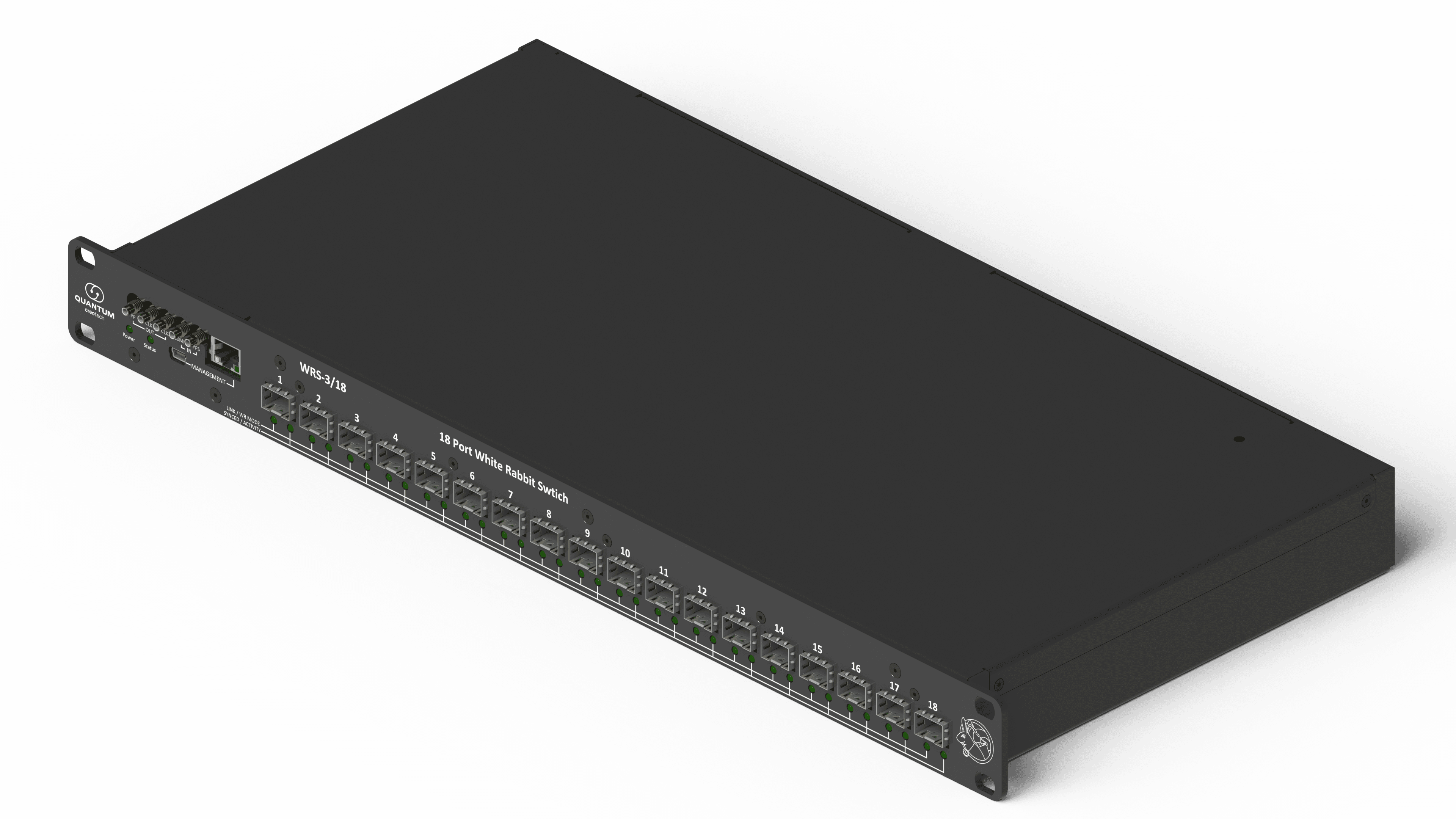
Creotech Quantum S.A. sells White Rabbit switches, interface boards and engineering support for equipment that must share a clock across a network. A radio telescope, for example, needs to line up measurements from different antennas. Knowing what happened is only half the job; the equipment must agree on when.
Developed at CERN with partners, White Rabbit measures and compensates for delays in network links so its specialist hardware can keep clocks aligned to less than a billionth of a second. Researchers can then compare measurements taken far apart without mistaking a clock error for something interesting in the data. The company’s published examples include timing equipment supplied to CERN, FAIR/GSI and the LOFAR radio telescope.
From shared clocks to shared keys
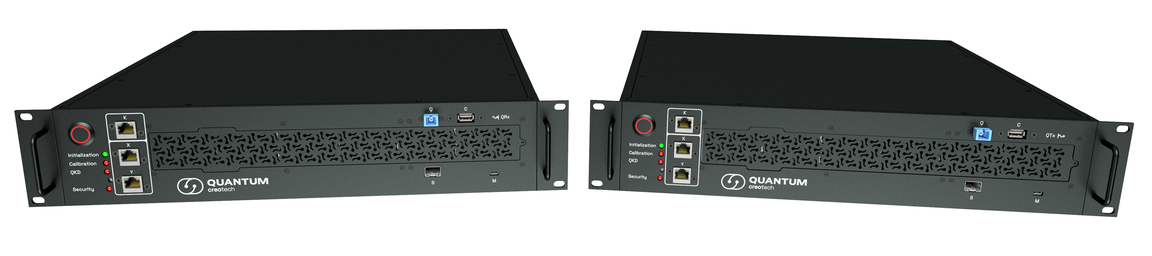
Creotech Quantum S.A. is developing quantum key distribution equipment to help organisations share secret encryption keys between sites. Its proposed system pairs a transmitter with a receiver over fibre and uses White Rabbit for synchronisation. The company identifies banks, telecom operators and public institutions as potential users, and offers consultations and pilot projects.
Quantum key distribution, or QKD, uses optical signals to establish matching secret keys. Because attempts to measure those signals can introduce detectable disturbances, both ends check the results and process the key material before passing usable keys to the encryption system. Ordinary encryption then uses the keys to protect the data, while the QKD devices and the communication used to check results also need to be secured.
Financial facts
The split makes the first accounts easy to misread. Creotech Quantum S.A.’s statutory first-quarter accounts cover the legal entity before the operating business transferred. Management also published an illustrative view of that business, using estimates to allocate shared costs.
Illustrative figures for January to March, in PLN million, from the company’s first-quarter report:
| Measure | Q1 2025 | Q1 2026 |
|---|---|---|
| Product sales | 2.43 | 5.54 |
| Grant income | 1.43 | 3.46 |
| Operating profit / loss | −1.60 | 1.80 |
Product sales more than doubled, while grants provided roughly 38% of the combined product-sales and grant-income total in Q1 2026. Customer invoices and research funding both support the business, but they come from different sources. The profit figure also reflects management’s cost allocations, rather than a full quarter of running independently.
Separately, the company raised PLN 81.2 million before expenses through a May 2026 share issue. It said the proceeds would support research, engineering and testing facilities, commercial expansion and potentially acquisitions.
Explore Creotech Quantum S.A.’s financial statements and reporting context.
What’s ahead
Creotech Quantum S.A. has scheduled its half-year report for 30 September 2026. It will include the first months after the business transfer, although management expects setup costs to affect the early reporting periods. That makes it a useful next step in understanding how the inherited products, development work and newly funded organisation fit together as a separate business.
Visit the Creotech Quantum S.A. company profile.
Share this article
Sources
- Grzegorz Kasprowicz: Creotech’s origins and open-hardware business model, CERN presentation, slides 2 and 9
- Creotech Instruments S.A.: completion of the demerger
- Creotech Quantum S.A.: company background and activities
- Creotech Quantum S.A.: technology areas and applications
- Creotech Quantum S.A.: Sinara products, services and development partners
- M-Labs: ARTIQ’s origins and timing architecture
- M-Labs: Sinara hardware and assembled systems
- The control system of the AEgIS experiment at CERN, Kornakov, Zieliński and Kasprowicz
- Quantum Machines: OPX1000 control platform
- Qblox: Cluster control and readout platform
- Creotech Instruments S.A.: electronics used in AQTION, December 2021
- Creotech Quantum S.A.: ion-shuttling electronics in Millenion
- European Commission: Millenion phase-one objectives, funding and dates
- European Commission: Quantum Technologies Flagship
- Creotech Quantum S.A.: White Rabbit equipment, services and applications
- Creotech Quantum S.A.: White Rabbit switch and product image
- CERN: White Rabbit and a common time reference across a network
- Creotech Quantum S.A.: quantum communication and QKD development
- Creotech Quantum S.A.: QKD product leaflet, module image on page 4
- ETSI: how QKD uses quantum and authenticated classical channels, sections 3.2.1.1–3.2.1.2
- ETSI: security evaluation of QKD modules
- Creotech Quantum S.A.: first-quarter 2026 report, including illustrative transferred-business figures
- Creotech Quantum S.A.: share-issue disclosures and reporting calendar